
A Schmidt-Cassegrain telescope is a specific type of telescope where rays of light enter the telescope in a parallel direction, The Light bounces off of a PRIMARY MIRROR, reflecting onto a SECONDARY MIRROR back toward the PRIMARY MIRROR. Of note, the PRIMARY MIRROR has a hole in the center to allow this light to pas through to your eye (or in my case, a camera)
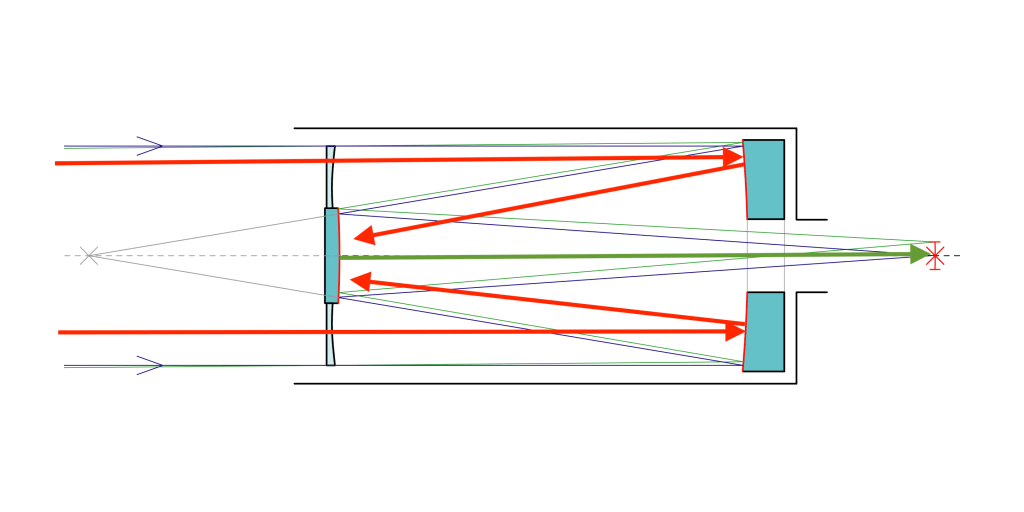

Appearance of PRIMARY MIRROR
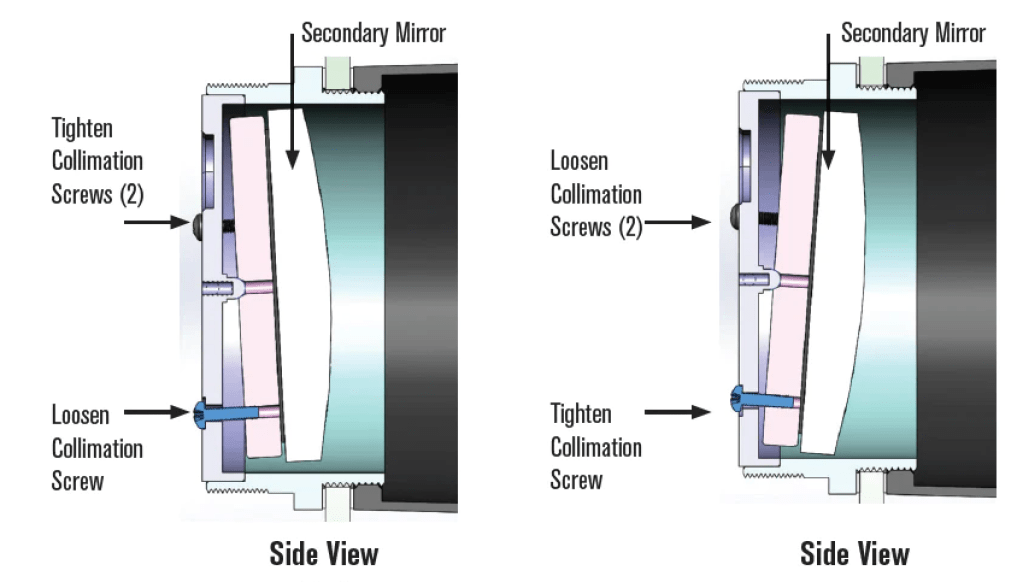
The SECONDARY MIRROR has the ability to move, changing where the light rays land on your eye (or in my case, the camera sensor). So we would like them to be in perfect alignment.

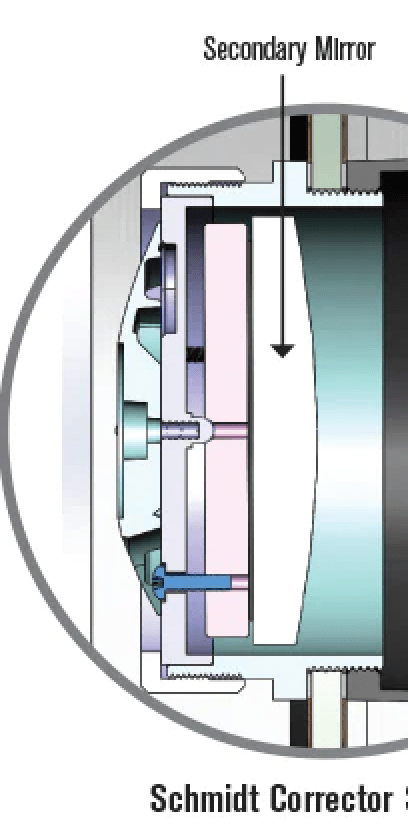
But the SECONDARY MIRROR can be off, causing the light to not transmit through the telescope in the correct path
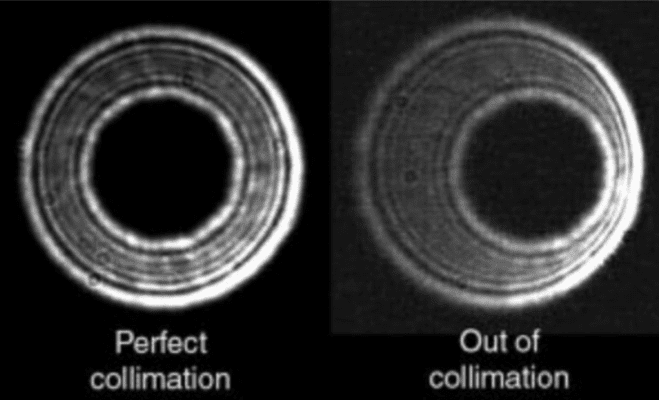
So this can alter the image collected. With the example on the left being correct alignment (“collimation”) and that on the right being non-aligned.
For the Schmidt-Cassegrain Telescopes, the Celestron Company gives an excellent explanation of how this should be performed.
 SingerAstro